
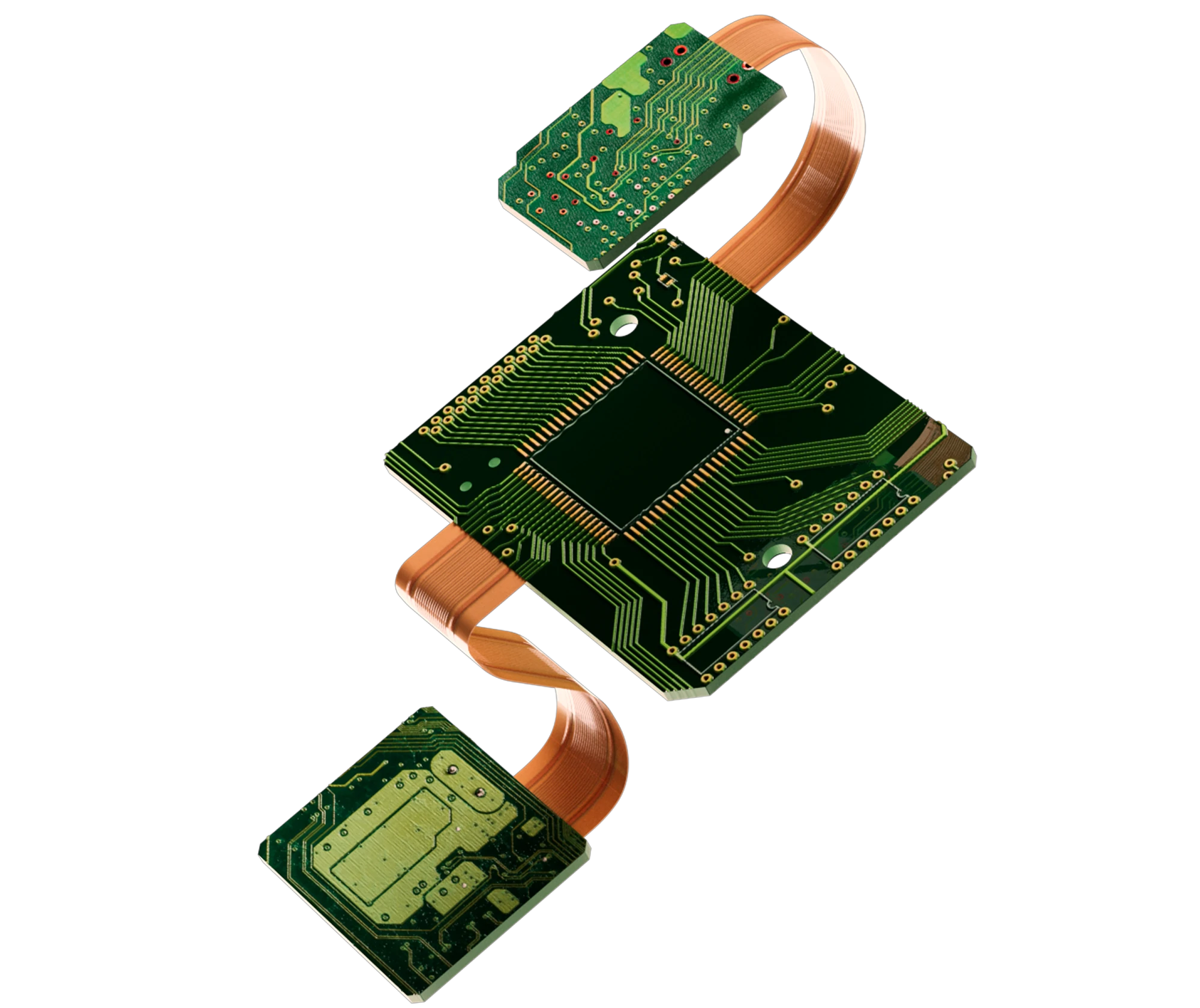



Bookbinding refers to the slight offset of flexible layers within a rigid-flex PCB stackup to reduce mechanical stress during bending. This technique prevents buckling or wrinkling in the flex area, improving long-term reliability in dynamic flex applications.
Rigid-Flex and Flex PCB Solutions
From simple flex to multilayer rigid-flex, Summit provides precision engineering and materials expertise for lightweight, space-saving, and mechanically resilient electronics.
Rigid-Flex
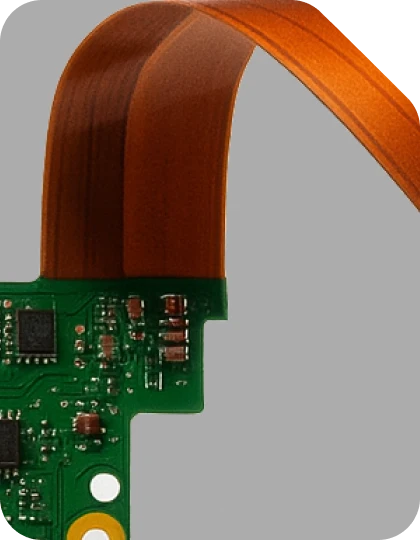
Rigid-flex PCBs combine the durability of rigid boards with the adaptability of flexible circuits, creating a single integrated design. By incorporating flexible layers into rigid stack-ups, designers can achieve lighter, smaller, and more mechanically robust assemblies for complex electronics.
Summit’s extensive experience with multilayer rigid-flex stack-ups, tight registrations, and advanced materials delivers manufacturable designs with proven electrical performance and mechanical reliability.
Key Attributes of Core or Standard Rigid PCBs
- Integrated rigid-flex layers create a unified construction
- Fewer connectors are required for simplified assembly and improved dependability.
- The lightweight, compact design saves space and reduces mass.
- Dynamic flex capability supports folding and repeated mechanical bending.
- High reliability is maintained under vibration, shock, and thermal stress.
Flexible Circuit Boards
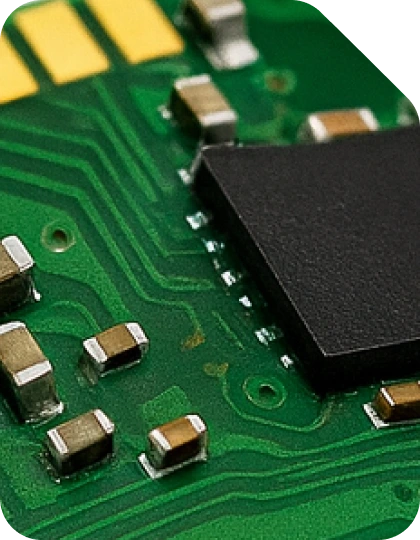
Flexible PCBs offer thin, lightweight interconnects that contour to unique shapes and fit tight packaging requirements. They minimize hardware, streamline assembly, and enable compact electronic designs.
Summit’s depth in multilayer flex, fine-line imaging, and advanced coverlay systems ensures durable, manufacturable solutions that deliver electrical precision and mechanical resilience in demanding form factors.
Key Attributes of Flex Circuit Boards
- Thin polyimide films enable ultra-compact designs.
- Fewer interconnects simplify builds and lower risk.
- Lightweight circuits conserve space in tight enclosures.
- Bendable formats adapt to complex geometries.
- Single-sided, double-sided, multi-layer flex
Capabilities
Rigid-flex and flex capability highlights
-
High-Layer Count Rigid-Flex Builds
Complex, multilayer rigid-flex boards with tight bend requirements. Summit delivers 20+ layer rigid-flex builds for aerospace, defense, and high-reliability markets.
-
Bookbinder Technology
Staggered flex layers achieve tight bends without stress, cracking, or buckling. Our engineering processes allow precise bend radius.
-
Adhesive and Adhesiveless Constructions
Experience with both flex construction types matches thickness, flexibility, durability and signal integrity needs for mission-critical designs.
-
Laser-Drilled Microvias
Controlled drilling produces high-accuracy microvias. Summit state-of-the-art laser drilling supports fine-pitch requirements in rigid-flex designs.
-
Stiffeners
Reinforced rigid areas for durability, flatness, and assembly handling. Precision stiffener integration ensures stability and manufacturability.
-
Advanced Materials Expertise
Polyimides, adhesiveless laminates, and hybrid stack-ups for harsh environments. Decades of flex material experience ensures reliable performance.

Rigid-Flex Overview
Learn more about benefits, materials, processing, design considerations, and reliability challenges of flex and rigid-flex PCBs.
Contact us
We’re available to answer any questions
-

Email Us
info@summitinterconnect.com -
Call Us
+1 (877) 264-0343
FAQ
Frequently asked questions.
-
-
Flex and rigid-flex designs rely on polyimide films, adhesiveless copper foils, and specialized coverlays for flexibility and durability. Material selection affects bend radius, thermal performance, and electrical stability, making it a critical part of the design process.
-
Yes. Summit offers full assembly services for both flex and rigid-flex PCBs, including component placement, soldering, and inspection. We follow IPC-A-610 workmanship standards and use specialized fixturing and handling processes to protect flexible circuits during assembly.
-
Rigid-flex PCBs eliminate connectors and cables between rigid sections, reducing weight, improving signal integrity, and enhancing mechanical reliability. They are ideal for compact, high-reliability systems like medical devices, aerospace electronics, and wearable tech.
-
Yes. Summit has extensive experience producing multi-layer rigid-flex PCBs with complex layer counts, multiple flex sections, and precise bend requirements. Our engineering team works closely with customers to optimize stackups, material usage, and manufacturability.
Solutions
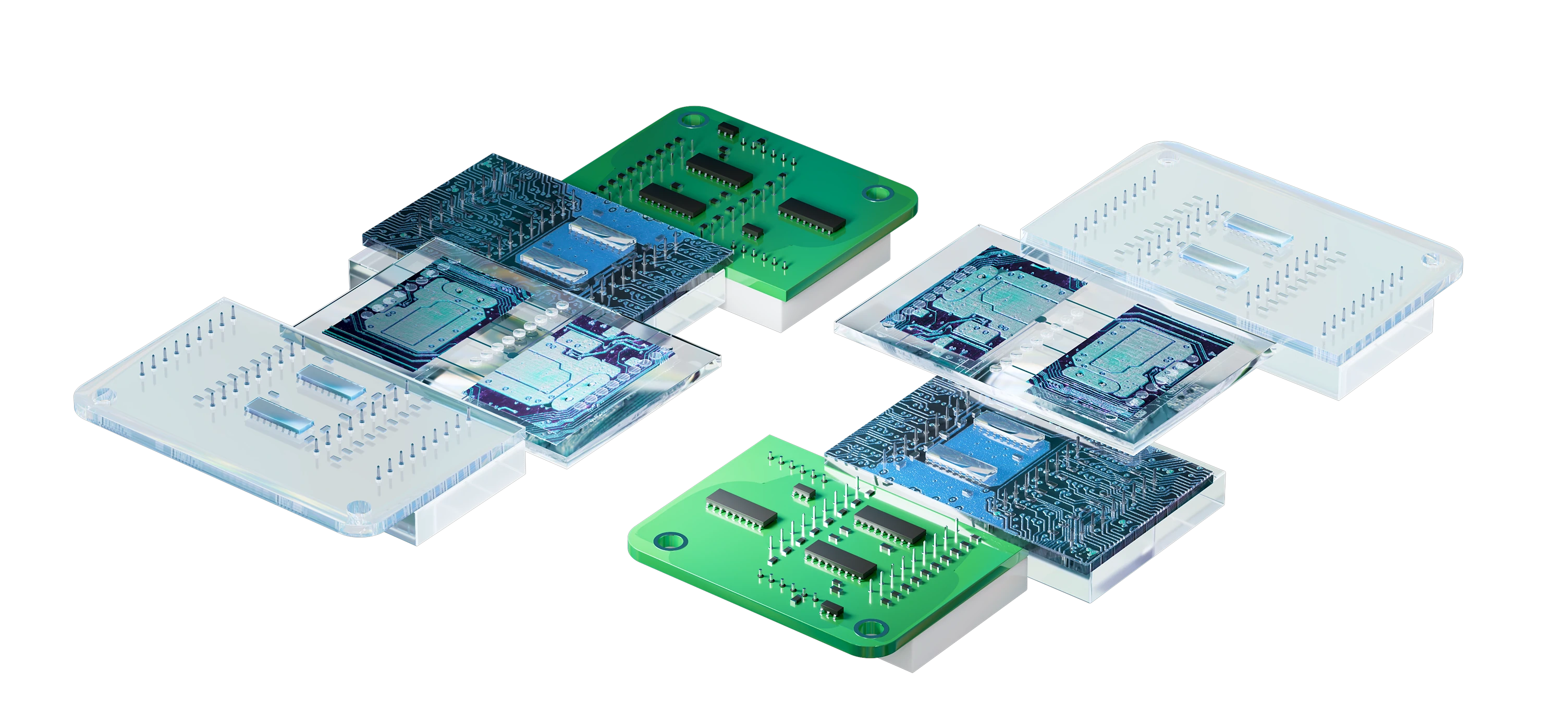
We manufacture a broad range of PCB types and technologies for a one-stop solution






Resources
Additional flex resources